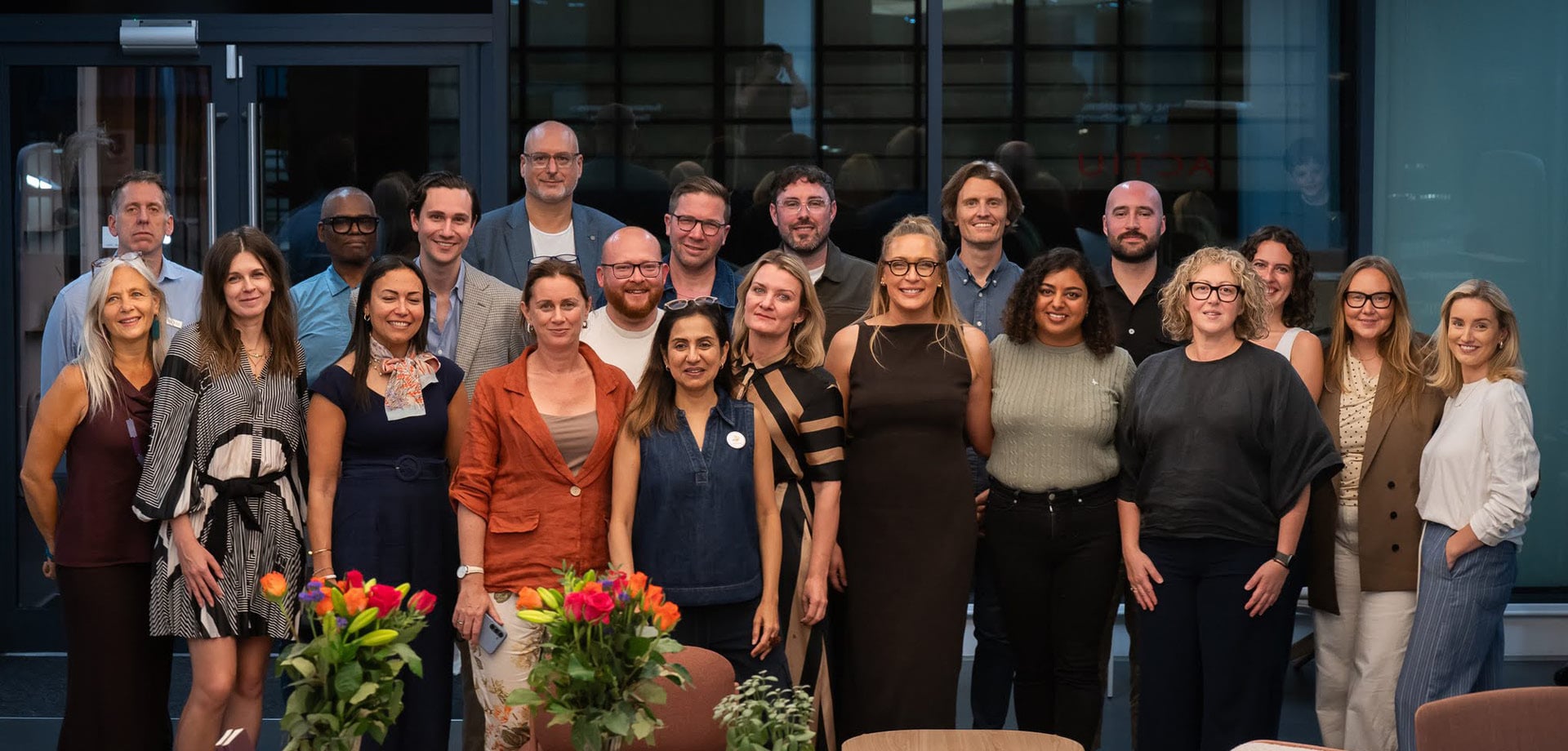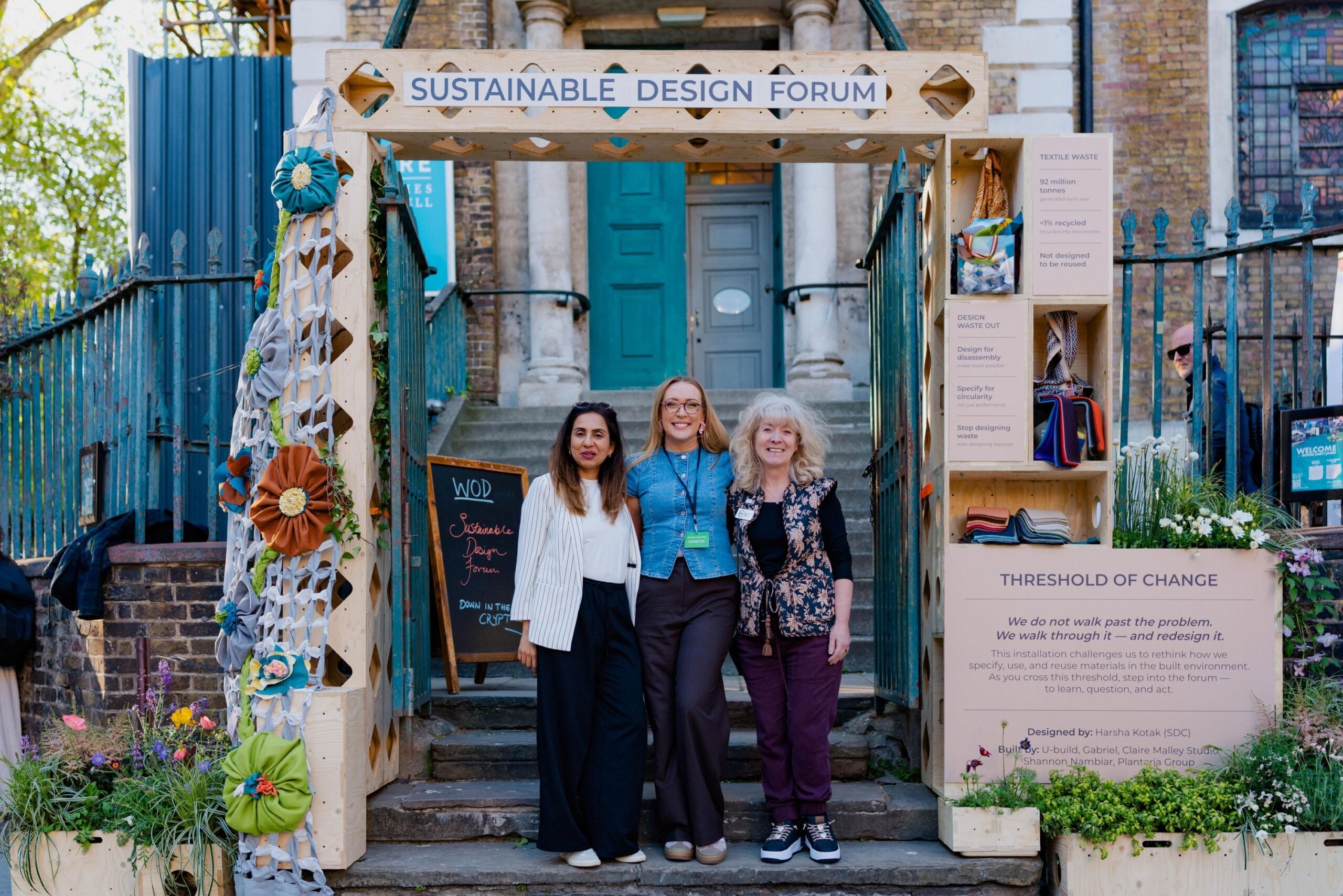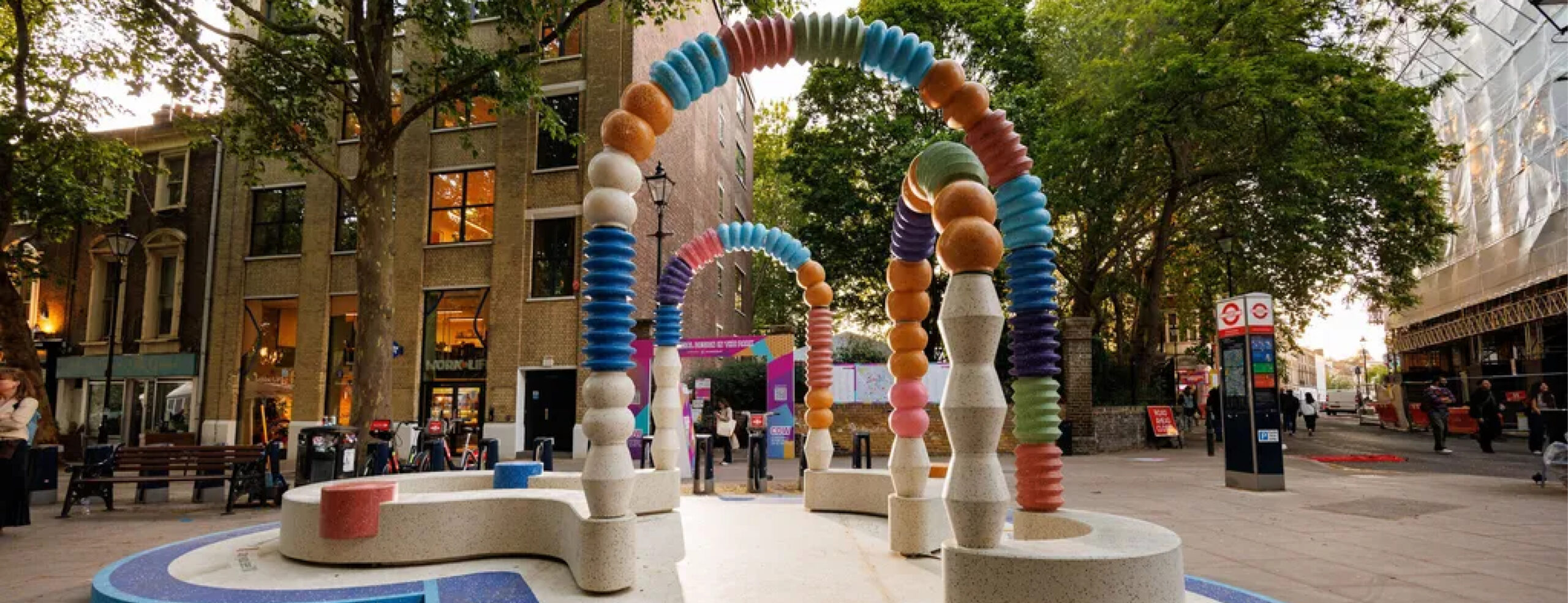
Clerkenwell Design Week returned for its 15th edition, bringing together three days of exhibitions, installations, talks and product launches from across the design industry.
This year’s conversations pointed towards workplaces designed with greater consideration for the people using them. Adaptability, comfort, inclusivity and longevity appeared across everything from spatial planning to furniture and materials.
For Axis Environments, these themes raise practical questions: how can a workplace support different ways of working, feel welcoming throughout the day and remain useful as an organisation’s needs change? Here are the ideas that stood out.
Designing for All, Not the Average
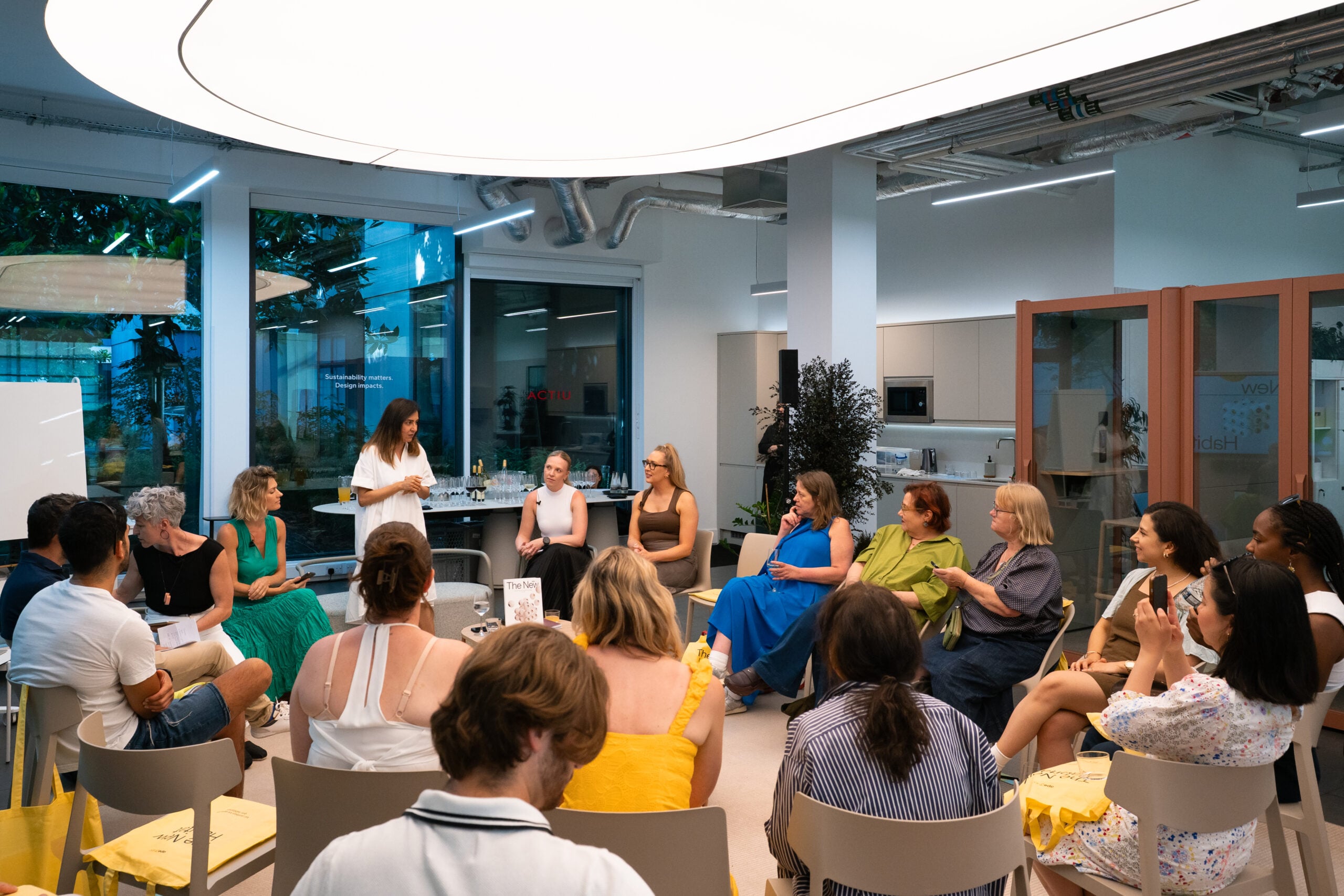
Neuroinclusive design was a recurring theme throughout the festival. A panel discussion hosted by Women in Office Design (WOD) at KI Europe, Designing for Neuroinclusion & Neuroaesthetics, challenged the idea of designing for an “average” user. Instead, it explored how workplaces can support a wider range of sensory, cognitive and behavioural needs.
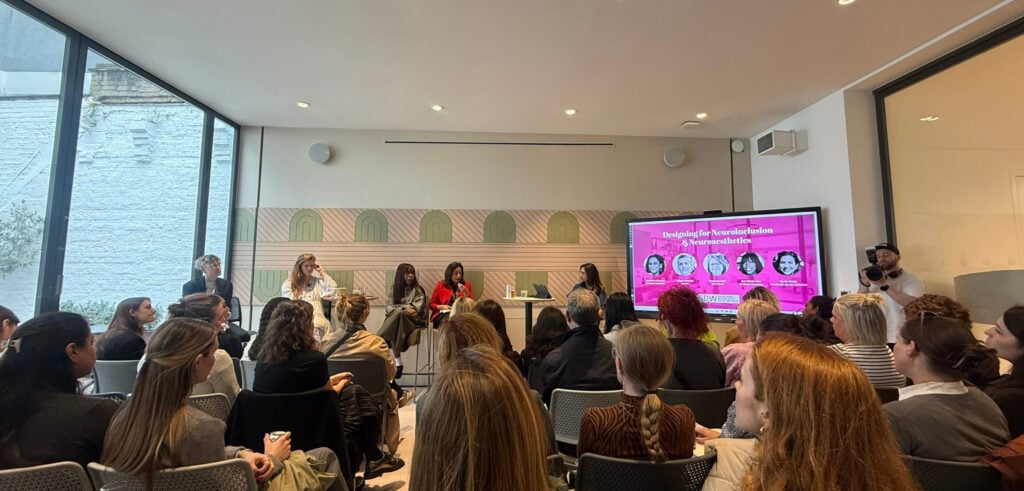
A choice of settings is central to that approach. Quiet areas for focused work, spaces for collaboration and places to pause or retreat allow people to respond to their surroundings and choose where they work best.
“Designing for neuroinclusion means moving beyond compliance and thinking more carefully about how people experience a space,” said Katie Bowes, Head of Design at Axis Environments. “From sensory load, light sensitivity, colour accessibility, stimming comfort, restorative corners and moments of retreat, it’s about creating environments that give people greater agency over how they work.”
The discussion made clear that neuroinclusion needs to be considered early in a project, when decisions about layout, lighting, acoustics and the range of spaces available can have the greatest impact.
Bringing Nature Back into the Workplace
Across textiles, finishes and lighting, nature-inspired design was a visible theme. Organic forms, tactile surfaces and materials influenced by landscapes offered ways to create workplaces that feel warmer and more connected to the outside world.
Brands such as Kvadrat and Camira presented textiles shaped by natural patterns and movement. Lighting from Tom Raffield demonstrated how natural materials and craftsmanship can contribute to the atmosphere of a space as well as its function.
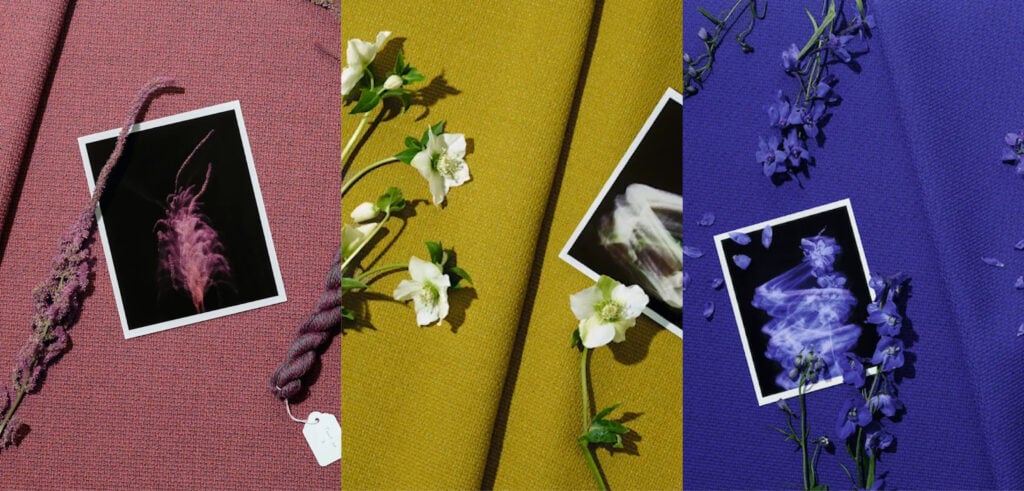
For workplace projects, material choices influence more than appearance. Texture, colour and light all affect how a space feels to use, while durability and material transparency help determine how well it will serve a workplace over time.
The Next Chapter for Circular Design
Sustainability remained prominent at CDW, with much of the discussion focused on how circular principles can be put into practice. Refurbishment, remanufacture and product longevity featured alongside the need for clearer material information.
A panel hosted by New Design Group explored barriers to wider adoption, including inconsistent product data, cost uncertainty and limited infrastructure. It also highlighted the role of collaboration in making reuse and refurbishment easier to deliver.
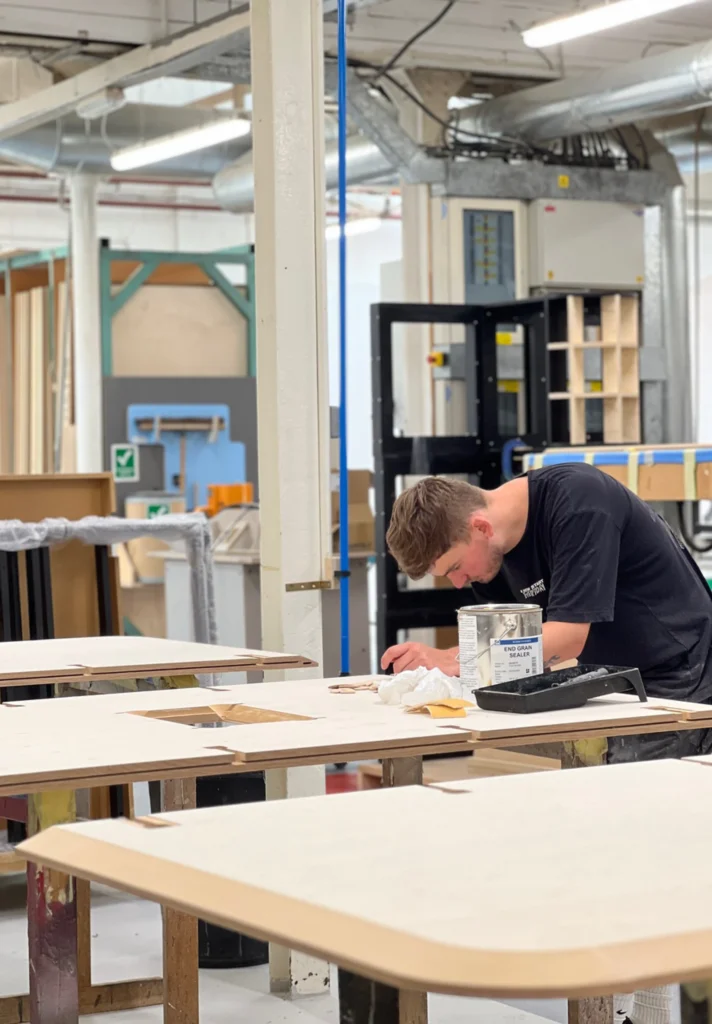
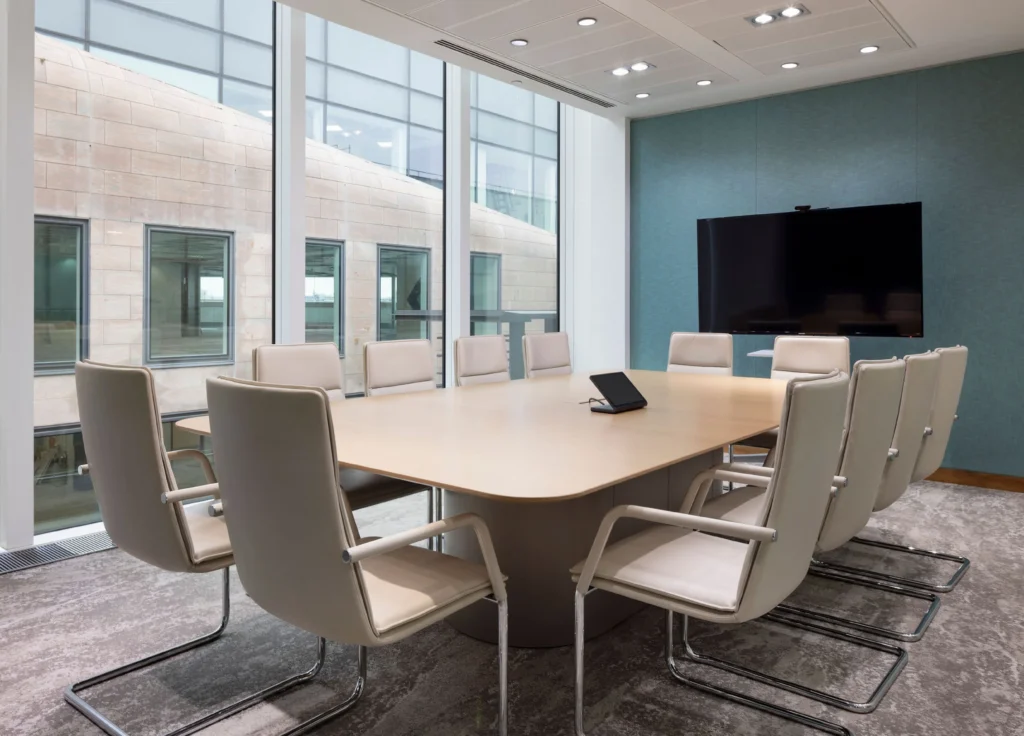
Pictured: a table remanufactured for reuse as part of a global law firm’s London office fit-out.
Circularity is most effective when it informs the brief from the outset. Understanding what can be retained, adapted or refurbished before designing around new products gives project teams more scope to reduce waste and make the most of existing assets.
The Continued Influence of Hospitality
Sculptural furniture, relaxed seating and lounge-style settings featured across showrooms, reflecting the continued influence of hospitality on workplace design.
Davison Highley’s Elmer modular sofa was one example, pairing a sculptural form with the comfort associated with residential interiors. Pieces like this can help create settings for informal meetings, conversation or a change of pace during the working day.
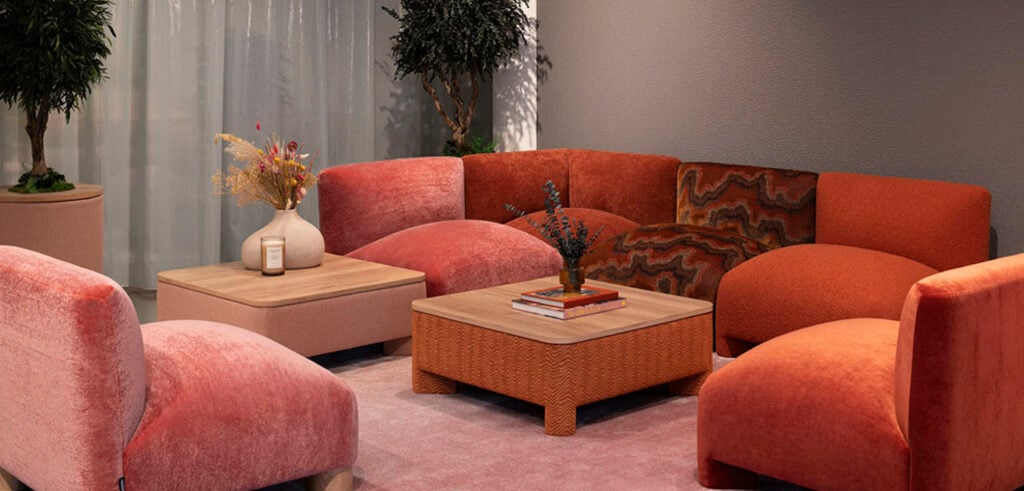
There was also an emphasis on furniture that is easy to use. Wilkhahn’s WiChair explored dynamic movement and self-adjusting support, encouraging changes in posture without a series of manual controls. Together, these products point to workplaces that offer comfort across a wider range of activities and settings.
Simplicity with Character
Many product launches favoured simple forms, careful detailing and considered colour. The focus was on furniture that could sit comfortably within different interiors while still bringing character to a space.
Moventi’s Tor conference table paired a restrained form with practical detailing, while Knoll’s Morrison Hannah Chair showed how an established design can bring personality to contemporary workplace seating.
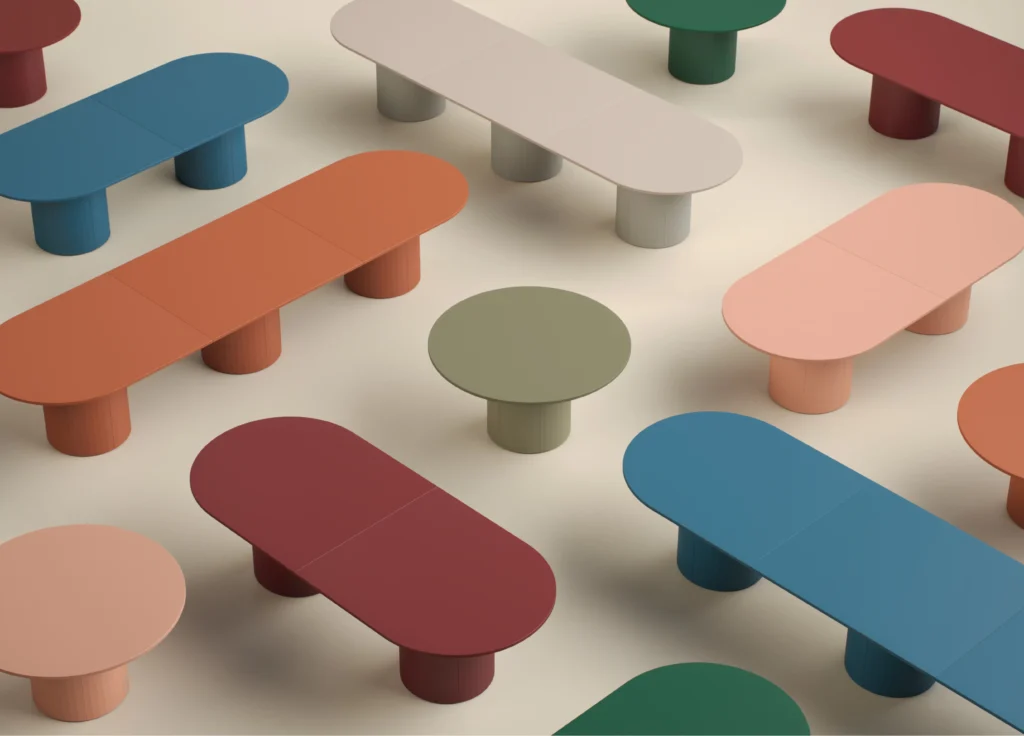
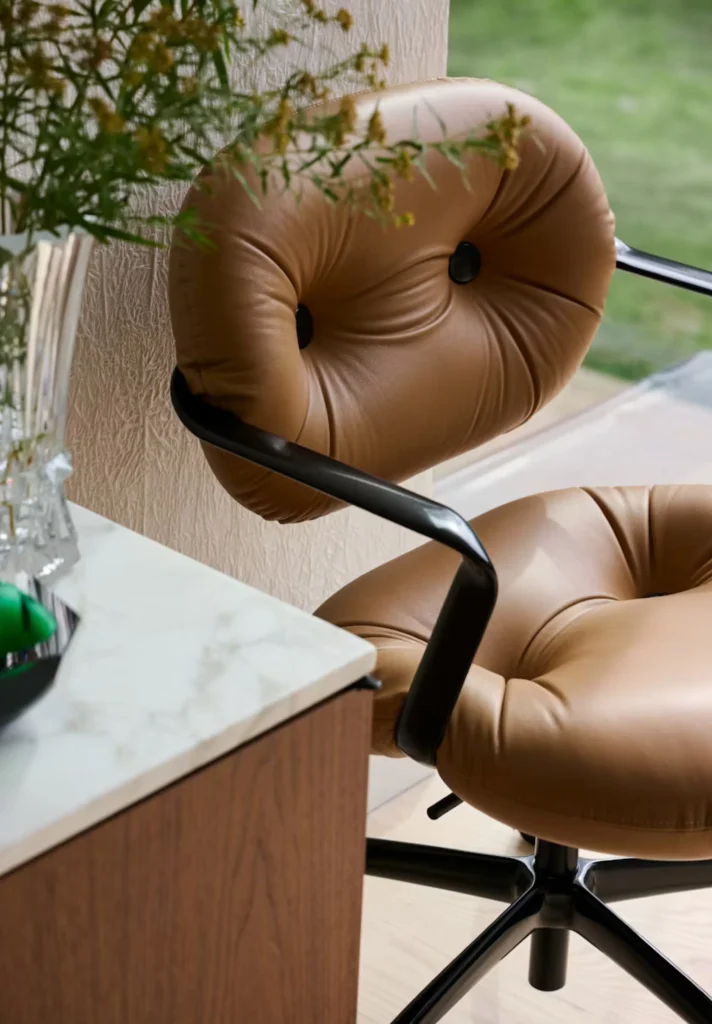
Left: Moventi‘s Tor conference table. Right: Knoll‘s Morrison Hannah chair.
These examples show how a workplace can feel distinctive without relying on every element to make a statement. A well-considered mix of furniture, materials and colour can create a cohesive interior with room for the organisation’s identity to come through.
What This Means for Workplace Projects
The strongest ideas at Clerkenwell Design Week had a common thread: giving people more choice while creating spaces that can stand the test of time.
Neuroinclusive planning, tactile materials, circular thinking and hospitality-inspired settings each offer a different way to improve the workplace experience. Their value comes from considering them together, from the first conversations about how a space needs to work through to the details people encounter every day.